
Drivers often ask, “Do I need new shocks?” Here’s how to tell:
Lost ride quality
If your vehicle has developed a rough ride, lost its original handling, control, and stability, or exhibits nose-dive on braking and excessive body roll in turns, chances are you need new shocks or struts.
Mechanical shock failures
There are obvious signs of mechanical failure that can indicate the need to replace shocks and struts. A heavy fluid leak, a bent piston rod, or a cracked or broken mounting bracket are common failures that require shock replacement.
How do pro mechanics evaluate shocks and struts?
Professional service technicians will examine shocks and struts for signs of mechanical failure and perform a road test to evaluate their performance.
If a road test reveals too much body and tire movement when steering at speed, or if the vehicle’s weight shifts too far forward during hard braking, the shocks or struts are likely in need of replacement. Other signs that a vehicle needs new shocks or struts include steering that feels too loose or responds too slowly to inputs. If the vehicle’s front end bobs up and down excessively at the end of a stop, it’s a sign that the shocks are worn and can't properly control body movement.
If your shocks are working as designed, your vehicle should stay well-controlled during hard stops and while steering at speed.
If you’re asking yourself, Do I need new shocks? we suggest that you have a KYB Vehicle Control Center perform a road test and give you a report on your vehicle.
Why is shock and strut performance essential for driving safety?
Safe stops
Being able to quickly stop a vehicle requires that the tires be firmly on the road. As shocks/struts wear and tire-to-road contact becomes less effective, the vehicle can’t stop as well.
Test source RAC (Royal Automotive Club) Test No.996
Safety system operation
Modern vehicle systems, such as ABS, Traction Control, and ESC, all rely on having the tires in firm contact with the road. Worn shocks allow the tires to bounce excessively when passing over bumps or uneven surfaces.
Modern safety systems have dramatically reduced driving fatalities and vehicle rollovers, but without proper tire contact with the road, safety systems can’t perform as intended. This makes the systems less reliable and reduces driving safety. Most vehicles manufactured since 2000 have at least one of these safety systems.
Tire damage
Worn shocks or struts allow the tires to move up & down excessively, creating an evenly spaced wear pattern. As the condition worsens, tire noise, traction loss, and tire damage occur.
Why do shocks wear out?
Worn valves
Twin-tube shocks and struts use a stack of metal valve discs to control the flow of hydraulic oil inside the shock or strut. These disc valves flex thousands of times a minute as you drive. Over time, these stamped metal discs experience metal fatigue and no longer work as designed. The result is a shock that can’t keep the tire firmly planted on the road as it should be. Monotube shocks don’t use disc valves, but they do have a ‘dividing piston’ that separates the oils and pressurized gas inside the shock. Over time, the seal on the dividing piston can wear, allowing gas and oil to mix, degrading the shock’s performance or completely disabling it.
Worn seals
Every shock and strut has a piston rod running the length of the unit. As the rod moves up and down through the shock, a piston rod seal prevents oil from leaking from the fluid reservoir. The piston rod seal can become damaged or worn over time, allowing hydraulic oil to escape from the reservoir tube. Over time, this will degrade the shock's performance or, in extreme cases, completely disable it.
Mechanical damage
Debris on the roadway can damage shocks or struts, reducing performance or disabling them completely. Similarly, hitting an obstacle or pothole at high speed or under heavy load can damage a shock or strut.
Additional content from:
For Drivers

Braking Handling and Stability
Do shocks and struts affect braking, handling, and stability?
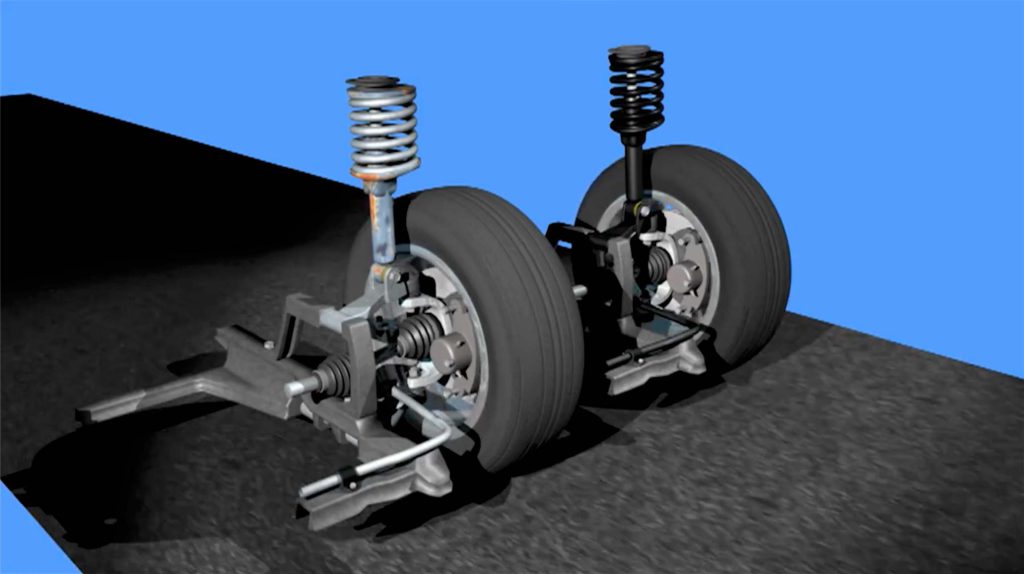
Reasons to replace your shocks
“What are the reasons to replace your shocks?” Here are the four most common conditions that result in shock and strut replacements
How to Choose the Right Shocks
KYB doesn’t offer “good, better, best” shocks. When a component affects handling, control, and safety, there should be no compromises in quality or performance.

Ride Comfort vs Safety
There’s no need to choose - you can choose shocks and struts that provide both comfort and safety.

Videos for Drivers
Latest videos from KYB for drivers